
We Learn As We Go
And, make the necessary adjustments from our learnings
Back in 2020, for some reason that I can’t recall, I added Choline & Inositol 500 mg to my daily supplement routine, then for some other unknown reason, I dropped it in 2024. My guess is that I ran into an article on choline doing research on COVID-related supplementation, including the zinc/quercetin connection. Choline probably fell off my list because of some temporary Amazon availability issue. They do a great job, but sometimes do run short of something. Now, here we are in 2026, and I’m still reading about supplements every day of the week, and up popped something called citicoline, which, even though it sounds close to something on my list, didn’t ring any bells at all.
From the article’s description of citicoline’s actions in the brain, I headed to Amazon to see if I could add it at an affordable price. After all, at my age, any brain-boost is more than welcome, and after I saw that I had been taking the choline and inositol but had forgotten about it, I was a bit nonplussed, however not all that surprised! Hey, at least I remembered that I need brain-boosters! My research then pretty much confirmed my worst suspicions, namely that most people are going to need some kind of choline supplementation because we get it from the very same foods that the old food pyramid told us to avoid! Egg yolks, omigawd! Beef LIVER, the horror of it all! Then we wonder why dementia rates have been on the rise. Seems simple enough to me; we listened to the experts instead of doing commonsense research and trusting our gut.
Speaking of our gut, here’s what Claude came up with as a graphic representation of how choline, citicoline, and inositol work through our digestive system to end up benefiting our brain.
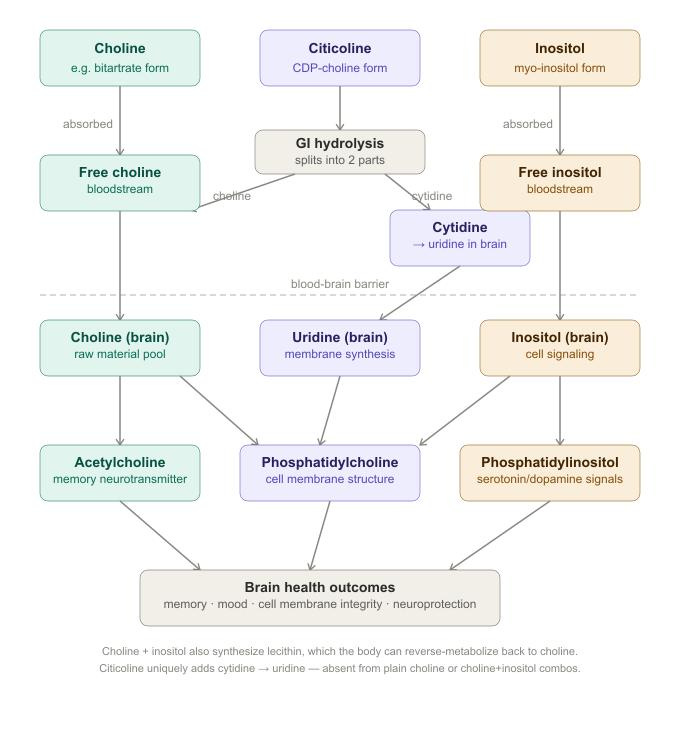
As you see in the chart, I can skip choline and add citicoline to get the same end result; however, while I do get inositol from dietary sources, it should be kept in my list. The pairing of inositol with choline, done by the manufacturer that I selected way back when, was a good move, unlike some supplements that just toss in, say, magnesium because most people need it. Choline & inositol make an excellent pairing. I would have expected to find a combined citicoline & inositol supplement, but trusty old Amazon doesn’t show any. My guess is that citicoline is a fairly new addition to the supplement roster while choline has been around for a while, and eventually, the combination I want will be produced by someone. In the meantime, I’ll be an informed consumer and purchase separate citicoline and inositol products, maximizing my health benefits while holding costs reasonable.
A very important note here is that if your gut health is not up-to-par, it’s not only your bowels that get out-of-whack; your brain does, too! That antibiotic C has to occasionally take for UTIs wreaks absolute havoc with her gut flora. That double-martini lunch you had yesterday did a number on your gut, not as serious as an antibiotic course, but damage nonetheless. Processed foods, which we must depend on anymore, do slow and steady gut harm. Dietary supplementation with naturally fermented foods such as fresh sauerkraut, yogurts, and kefir definitely help in the digestive department.
Inositol‘s dietary sources are actually more varied and less stigmatized than choline’s—nobody told you to avoid cantaloupe. Yet deficiency is still common, partly because processing destroys it and because of gut microbiome disruption from lifestyle and dietary choices.
Please remember something very important from this Post. I didn’t just rediscover a supplement I had forgotten. I happened to circle back to it during this week’s reading, knowing stuff now, that I didn’t know in 2020. Then, I had no clue about the bitartrate vs. citicoline distinction, the uridine pathway, the inositol pairing rationale, or the TMAO flap. Four years of continuous learning, which included this week’s supplement paper reviews, turned a casual COVID-era addition into a deliberate, well-justified supplement upgrade.
What I learned about TMAO could literally fill another Substack Post, but I’ll probably skip that because it gets pretty deep into weed growth that few of us need. The point is that I’ll keep doing the regular reading & research so you don’t have to, and I’d appreciate your support. Subscribe for five bucks a month, and if I disappoint you, cancel at any time.
Here’s a precis of what I waded through so you didn’t have to:
TMAO—trimethylamine N-oxide. Here’s the quick version:
When you eat choline-rich foods, gut bacteria convert some of it to trimethylamine (TMA), which the liver then oxidizes to TMAO. Elevated TMAO levels have been associated with cardiovascular risk—this is the study thread that got a lot of press a few years back essentially blaming red meat and eggs for heart disease via this pathway rather than the weather-beaten old cholesterol story.
The American Heart Association picked it up, media ran with it, and it became another club to beat us meat and egg eaters with.
The citicoline angle is the interesting wrinkle; choline in citicoline form is significantly less prone to that TMA conversion than choline from other dietary sources like phosphatidylcholine in red meat. So you’re getting better brain bioavailability AND sidestepping the TMAO conversion pathway more effectively than food-sourced choline.
The deeper story about whether TMAO is actually causal, or just a marker, is genuinely contested science and could require a few thousand words to sufficiently cover it.